Most Oxidized Teas by Processing Level
20 teas · 75%–100% oxidation
Green teas are heated quickly after picking to halt oxidation (0-5%), oolong teas are partially oxidized (20-80%), and black teas are fully oxidized (85-100%). The oxidation percentage directly affects the tea's flavor profile, color, caffeine content, and antioxidant composition.
This ranking orders teas by their oxidation level, showing the full spectrum from heavily oxidized Assam black teas to lightly oxidized white teas. Understanding oxidation helps tea enthusiasts predict a tea's character before brewing.
How we ranked these
Ranked by oxidation level percentage (0-100%). Oxidation data reflects standard commercial processing for each variety.
Dark Tea · China
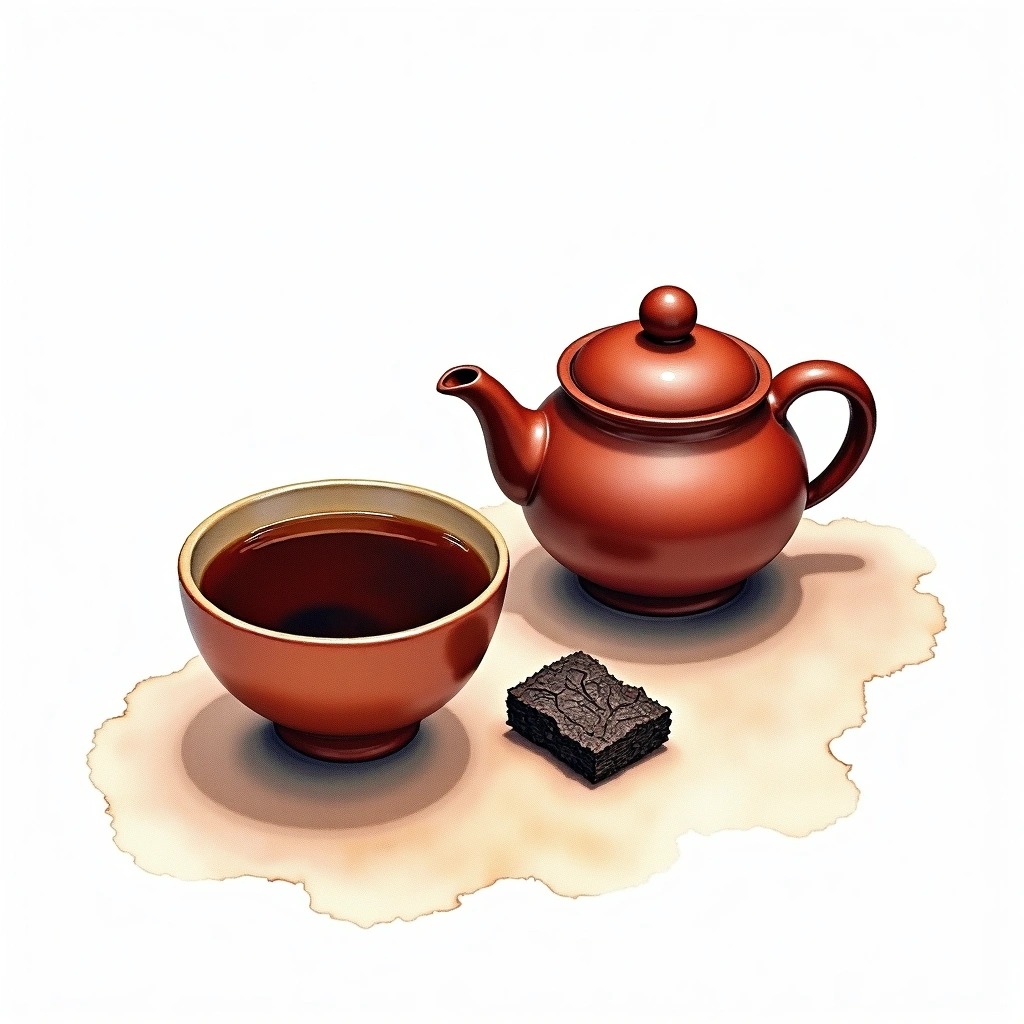
Shou (ripe) Pu-erh uses an accelerated pile fermentation process (wo dui) developed in 1973 by the Kunming Tea Factory to simulate the flavor of aged sheng in weeks rather than decades. The controlled

Black Tea · China
Lapsang Souchong from the Wuyi Mountains in Fujian province is the world's first black tea, dating to the mid-17th century. Traditional Zhengshan Xiaozhong is dried over pinewood fires, imparting a di

Black Tea · India
Irish Breakfast is a strong, robust tea blend dominated by Assam and sometimes Kenyan CTC teas. Stronger and more malty than English Breakfast, it was developed to complement Ireland's soft water, whi
-
 Keemun
Black Tea · China
Keemun (Qimen) black tea from Anhui province is China's most renowned black tea and a key component of English Breakfast blends. First produced in 1875, it features a complex wine-like character with
35.0mg 95% 4.0mg theanineSee details → -
 English Breakfast
Black Tea · India
English Breakfast is the world's most recognized tea blend, traditionally combining robust Assam, brisk Ceylon, and complex Keemun to create a full-bodied, well-rounded cup. Designed to pair with a he
45.0mg 95% 3.5mg theanineSee details → -
 Assam
Black Tea · India
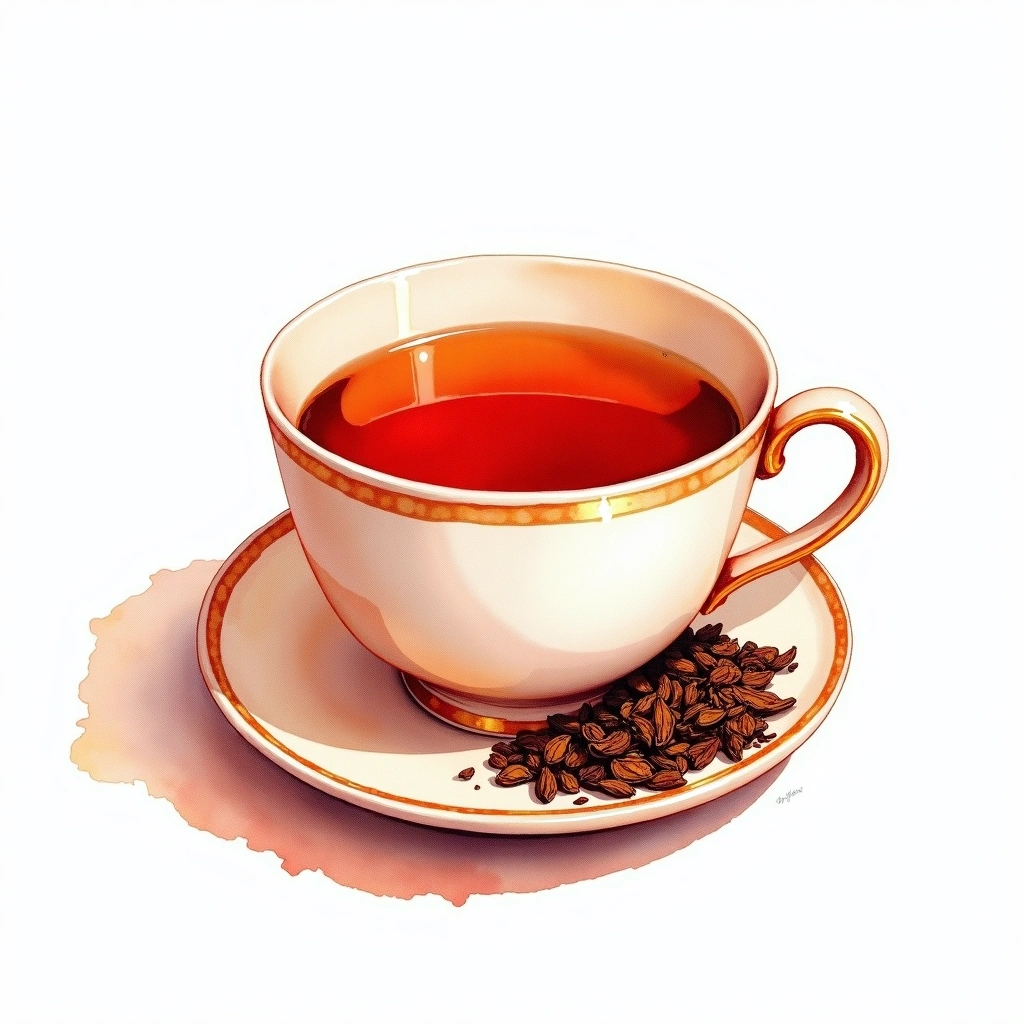
Assam tea comes from the lush Brahmaputra River valley in northeastern India, the world's largest contiguous tea-growing region. Made from the indigenous large-leaf Camellia sinensis var. assamica, it
50.0mg 95% 3.5mg theanineSee details → -
 Dian Hong Jin Zhen (Golden Needle)
Black Tea · China
Dian Hong Jin Zhen is the highest grade of Yunnan black tea, crafted exclusively from plump spring buds covered in fine golden hairs. Each bud is carefully hand-selected, withered, rolled, and fully o
36.0mg 92% 5.5mg theanineSee details → -
 Zhengshan Xiaozhong
Black Tea · China
Zhengshan Xiaozhong is the original, unsmoked version of Wuyi black tea from the Tongmu Village Nature Reserve in Fujian. While the smoked export version became known as Lapsang Souchong, authentic Zh
35.0mg 92% 4.0mg theanineSee details → -
 Dianhong (Yunnan Gold)
Black Tea · China
Dianhong is a premium Yunnan black tea distinguished by its abundance of golden buds and a rich, smooth character with notes of honey, cocoa, and sweet potato. Made from the large-leaf Yunnan varietal
38.0mg 90% 5.0mg theanineSee details → -
 Ceylon
Black Tea · Sri Lanka
Ceylon is the trade name for tea from Sri Lanka, produced across diverse growing regions at various elevations. High-grown teas (above 1,200m) from Nuwara Eliya and Dimbula are light, crisp, and fragr
40.0mg 90% 4.0mg theanineSee details → -
 Darjeeling
Black Tea · India
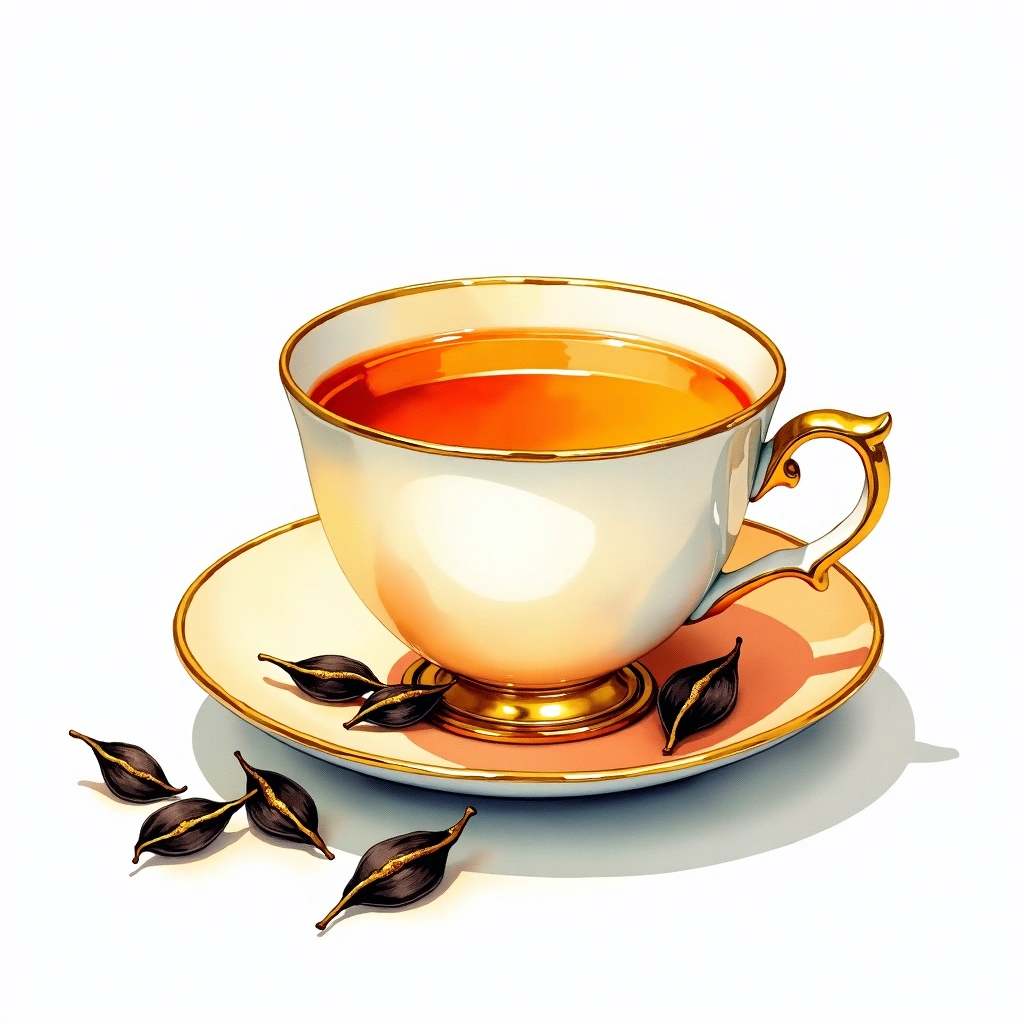
Darjeeling tea, grown in the Himalayan foothills of West Bengal, is often called the 'Champagne of Teas' for its exquisite muscatel flavor and bright, champagne-gold liquor. First Flush (spring) teas
40.0mg 90% 4.5mg theanineSee details → -
 Golden Monkey (Jin Hou)
Black Tea · China
Golden Monkey is a premium Fujian black tea named for its hooked, golden-tipped leaves that resemble monkey paws. Produced in small quantities with careful hand-processing, it delivers a smooth, non-a
35.0mg 90% 4.5mg theanineSee details → -
 Rwandan Black Tea
Black Tea · Kenya
Rwandan black tea is produced in the volcanic highlands of East Africa at elevations between 1,500 and 2,500 meters. The combination of equatorial sunshine, rich volcanic soils, and high altitude prod
42.0mg 90% 3.5mg theanineSee details → -
 Nilgiri
Black Tea · India
Nilgiri tea comes from the Blue Mountains (Nilgiri Hills) in southern India's Tamil Nadu and Kerala states. Grown at elevations up to 2,500 meters, these teas are bright, aromatic, and medium-bodied w
38.0mg 90% 4.0mg theanineSee details → -
 Earl Grey
Black Tea · China
Earl Grey is a flavored black tea scented with oil of bergamot, a citrus fruit from Calabria, Italy. Named after Charles Grey, the 2nd Earl Grey and British Prime Minister in the 1830s, it has become
40.0mg 90% 3.5mg theanineSee details → -
 Nepali Orthodox
Black Tea · Nepal
Nepali Orthodox tea comes from the misty hills of Ilam, Dhankuta, and Panchthar in eastern Nepal, along the same Himalayan ridge as Darjeeling. Grown at elevations up to 2,200 meters with similar terr
38.0mg 88% 4.5mg theanineSee details → -
 Kenyan Purple Tea
Black Tea · Kenya
Kenyan Purple Tea is a specialty varietal developed by the Tea Research Foundation of Kenya (TRFK 306/1) from a natural mutation of Camellia sinensis grown at high elevations in the Rift Valley. The l
32.0mg 85% 3.5mg theanineSee details → -
 Liu Bao
Dark Tea · China
Liu Bao is a post-fermented dark tea from Wuzhou in Guangxi province, with a history spanning over 1,500 years. Traditionally stored in bamboo baskets, it develops a distinctive betel nut aroma and sm
25.0mg 80% 3.0mg theanineSee details → -
 Liu An (Basket Tea)
Dark Tea · China
Liu An Basket Tea (not to be confused with Lu'an Guapian green tea) is a post-fermented dark tea from Qimen County in Anhui province, traditionally packed into small lined bamboo baskets for aging. Ea
22.0mg 75% 2.5mg theanineSee details → -
 Fu Zhuan
Dark Tea · China
Fu Zhuan is a compressed dark tea brick from Hunan province, unique for its cultivation of beneficial Eurotium cristatum fungus, which appears as tiny golden dots called 'golden flowers' (jin hua). Th
22.0mg 75% 2.5mg theanineSee details →