Boseong
South Korea
Altitude
50-400m
Climat
Humid subtropical with maritime influence and warm summers
Sol
Acidic sandy loam with good drainage
Récolte
April-September
À propos
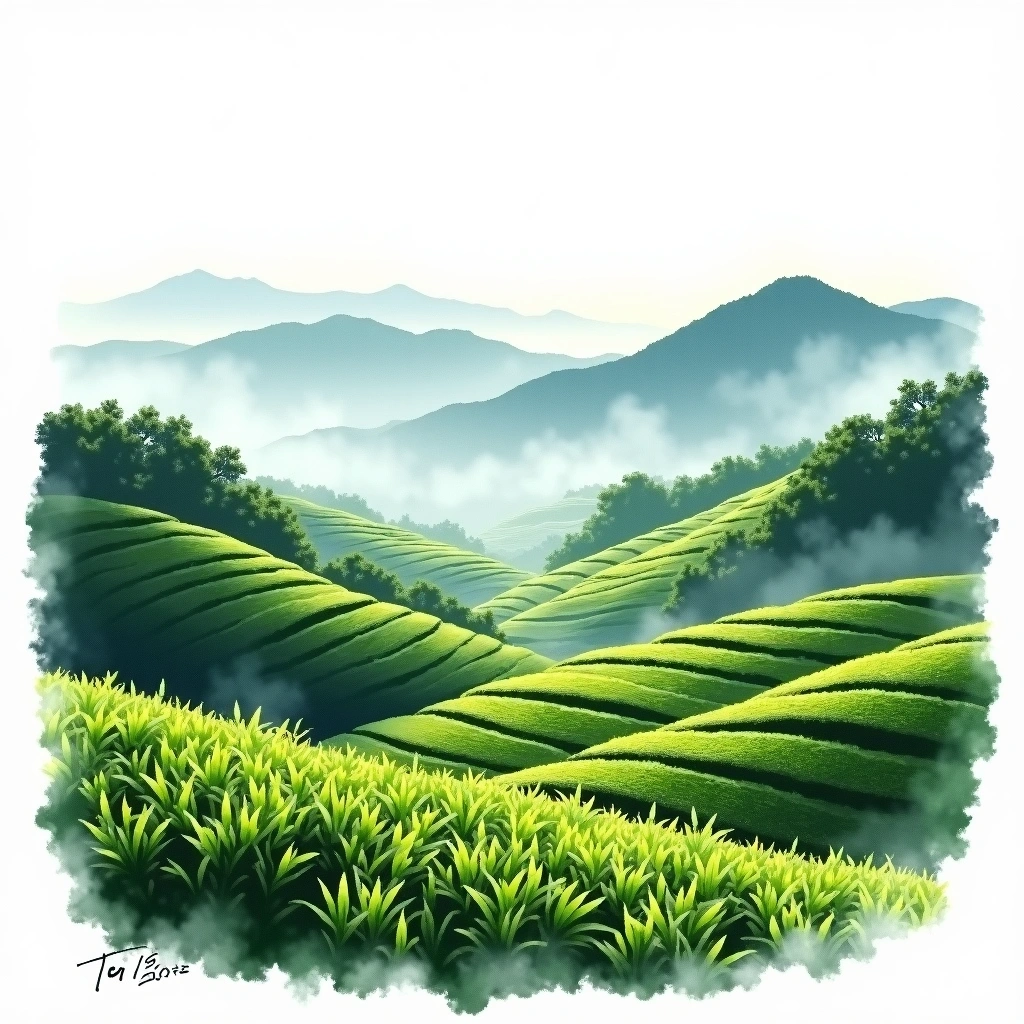
Boseong County in South Jeolla Province accounts for roughly 40% of South Korea's tea production, with its iconic terraced tea fields forming one of the country's most photographed landscapes. Korean tea grades are classified by harvest date: Ujeon (before Grain Rain, April 20), Sejak (before Ipha, May 6), Jungjak (before Soman, May 21), and Daejak (after Soman). Boseong teas tend toward a sweet, smooth character with less astringency than Japanese teas and a subtle toasted grain note. The region has also revived production of hwangcha, a traditional Korean semi-oxidized tea similar to yellow tea, which had nearly disappeared during the Japanese colonial period.
Variétés notables
Sejak, Ujeon, Jungjak, Hwangcha (Korean Yellow Tea)